
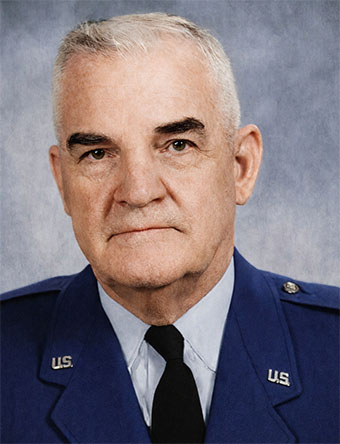
Colonel Samuel Taylor Moore was one of the earliest and most
influential communicators in American airpower history — a
journalist, combat veteran, public affairs leader, and prolific writer
whose career bridged three wars, the birth of American airpower, and
the rise of modern military journalism. His life’s work shaped how
Americans understood aviation, the U.S. Army Air Service, and later
the U.S. Air Force itself.
Colonel Moore arrived at the intersection of American military
aviation and public affairs through an unlikely path: a Massachusetts
newsroom. Before even four years of high school, he became a reporter
for the Springfield Union, covering local
National Guard units. When the Second Massachusetts Infantry deployed
to the Mexican border during the
1916 Punitive Expedition (also known as the Pancho Villa
Expedition), Moore accompanied them as an embedded journalist. It was during
this assignment that he met the
pioneering aviator Benjamin Foulois
when Gen Foulois was just a captain — an encounter that inspired him
to enlist in the Air Service when the United States entered World War
I.
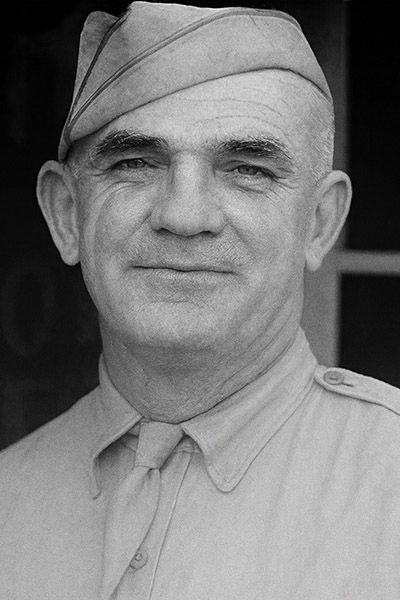
Moore joined the Air Service’s Balloon Section, a vital but hazardous
branch responsible for artillery spotting and battlefield observation.
He commanded the 7th Balloon Company in France, leading 180 soldiers
and flying
Caquot balloons
during the
St. Mihiel
and
Meuse-Argonne
offensives. For his service in France, he was awarded the Silver Star.
In a not-to-be-missed article he wrote for
Air Force Magazine in 1963 —
When Sausages Blazed in the Sky
— he described his experiences as a balloon pilot.
After World War I, Moore remained in the Air Corps Reserve — a
connection that would define his life for the next three decades
— while becoming a nationally recognized journalist and
commentator on aviation, preparedness, and national defense. His many
talents were not confined strictly to military issues though, as he
investigated immigrant smuggling, rum running, the Ku Klux Klan,
government corruption, and more, publishing in
Harper’s, The American Mercury, The Forum, Everybody’s,
and American Legion Monthly.
He also became a prolific author of aviation fiction. His stories
appeared in
Flying Aces, Sky Birds, War Aces, and
other popular magazines. His books — including
Aces All, Fighting Aces, and
The Balloon Boys — were consumed by
a generation of teenage readers. In the 1920s and 1930s, Moore was
quietly cultivating the next generation of aviators and air power
supporters. By the time those readers came of age during World War II,
many were ready — and eager —to join the Army Air Forces.
It was perhaps the most far-reaching public affairs mission of his
career.
Recalled to active duty in 1941, Moore initially worked with balloons,
but his experience soon carried him to the China-Burma-India (CBI)
theater — one of World War II's most challenging environments.
He flew eleven combat missions, traveled over the dangerous Hump route
to China, and in 1944 participated in
Operation Thursday, landing behind Japanese lines in Burma with British Major General
Orde Wingate’s famed Chindits at Chowringhee — one of the most
audacious airborne operations of the war.
But his most enduring contribution came as the Public Relations
Officer for the Tenth Air Force. In a theater marked by shortages,
disease, and low morale, Moore built a highly effective public affairs
operation. His teams produced news releases that appeared in American
newspapers, created radio programming that reached forward units
building the Ledo Road across Burma, and — most famously —
launched one of the most celebrated
command newspapers of the war: the
CBI Roundup.
Moore’s mentorship shaped a generation of military journalists. Many
of his young enlisted writers went on to distinguished careers at CBS
News, the New York Times, the
Washington Post, and in broadcasting and
entertainment. (If you're interested in reading more
CBI Roundups, you can find
links to almost all the issues here.)
After the war, Moore edited a study of Luftwaffe fighter operations in
Europe and authored a comprehensive two‑volume history of troop
carrier and glider operations. Recalled to active duty twice more
— in 1948 and again in 1950 — he became the first
commander of the USAF Air‑Ground Operations School, preparing pilots
for close air support missions in Korea.
In 1953, after more than three decades of combined active and reserve
service spanning three wars, Moore retired as a colonel. But even in
retirement, he continued his mission of keeping air power before the
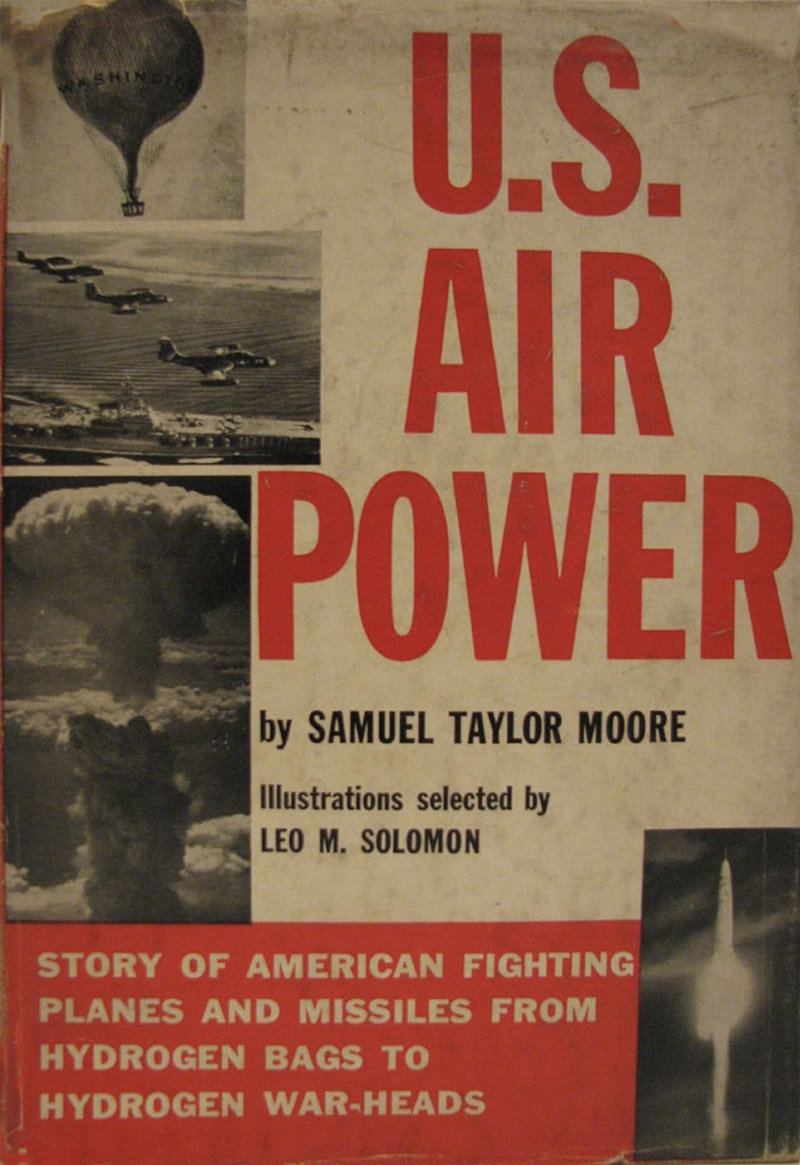
public. His 1958 book, U.S. Air Power,
traced the evolution of American military aviation “from hydrogen bags
to hydrogen warheads,” preserving the story of airpower at a pivotal
moment in the Cold War. (A very limited number of copies may still be
available. Click on the image of the book cover to link to Amazon.)
He was also a regular contributor to
Air Force Magazine throughout the 1950s
and 60s, writing for a new generation of airmen and veterans about the
long heritage of the Air Service, the Army Air Corps, and the Army Air
Forces. Here are a few examples:
Bombers Against Battleships
Some of Them Made It
Pony Express with Wings
Equally at home leading a balloon company in the Meuse-Argonne or
crafting a press release in New Delhi, writing adventure stories for
teenagers or briefing journalists in wartime, Samuel Taylor Moore
understood that the story of American air power was worth telling
— and that telling it well was itself a form of service. He
passed away in 1974, leaving behind a legacy as wide-ranging and
enduring as the sky he spent his life writing about.