
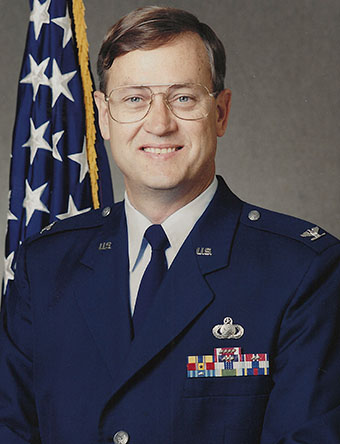
When Johnny Whitaker graduated from the United States Air Force
Academy in 1973, the Air Force was navigating a turbulent era —
Vietnam's aftermath, evolving Cold War pressures, and a public
increasingly skeptical of its military institutions. Over the next
four decades, Johnny would help smooth the turbulence by shaping how
the Air Force communicated with the American people and the world
— building a legacy that combined a rare blend of operational
understanding, communication skill, and people‑first leadership.
Beginning at Myrtle Beach AFB and later at Thule AB in Greenland,
Johnny learned public affairs from the ground up — gaining a
foundation in community relations, media engagement, and crisis
communication. A formative stretch at Ohio Bell Telephone as part of
the Air Force's Education with Industry Program gave him a civilian
communications perspective that few of his peers possessed, and it
showed throughout his subsequent assignments.
After EWI, Johnny got his first taste of the high visibility
environment of Washington, DC, excelling in assignments at the Andrews
AFB PA office and in SAF/PA’s media relations division in the
Pentagon.
Those jobs prepared him well for the diplomatic challenges he would
face while assigned to Ramstein AB in Germany, where he served first
at HQ USAFE’s media relations shop and then as the chief of the
Ramstein PA office. In Europe, he navigated some of the most sensitive
and consequential communications challenges of the Cold War era: the
controversial bed-down of ground-launched cruise missiles in the
European theater, the delicate repatriation of hostages following the
hijacking of TWA Flight 847, and Operation Eldorado Canyon — the U.S.
air raid on Libya in 1986. Each episode demanded precision under
pressure, credibility with a skeptical press corps, and the ability to
represent American policy while protecting operational security.
Johnny handled all those challenges with distinction.
Returning to the states, Johnny’s work at Lackland Air Force Base
placed him at the center of another defining moment — serving as lead
spokesman for casualty reception operations following Operation Just
Cause in Panama. Communicating with families, the media, and the
public about wounded service members required a rare combination of
accuracy, compassion, and composure. He delivered all of it.
Johnny’s ascending leadership roles in the 1990s transformed him from
a skilled practitioner into a field-shaping executive. As Director of
Public Affairs for Air Education and Training Command, support group
commander at Columbus AFB, Mississippi, and later in multiple tours as
Director of Public Affairs for Air Combat Command, he built and led
organizations that earned Air Force-wide recognition for their
excellence. Under his leadership, Air Combat Command's public affairs
office was named the Air Force's best major command public affairs
organization three times. That’s not a coincidence; for Johnny, it’s a
standard.
His appointment as Deputy Director of Public Affairs in the Office of
the Secretary of the Air Force from 1998 to 2001 placed Johnny at the
center of all Air Force public communications — a role that required
him to think strategically across a global enterprise at a moment of
significant institutional change. He brought to that position the same
rigor and judgment he had demonstrated at every prior assignment, and
he helped guide Air Force public affairs through a pivotal period in
its development.
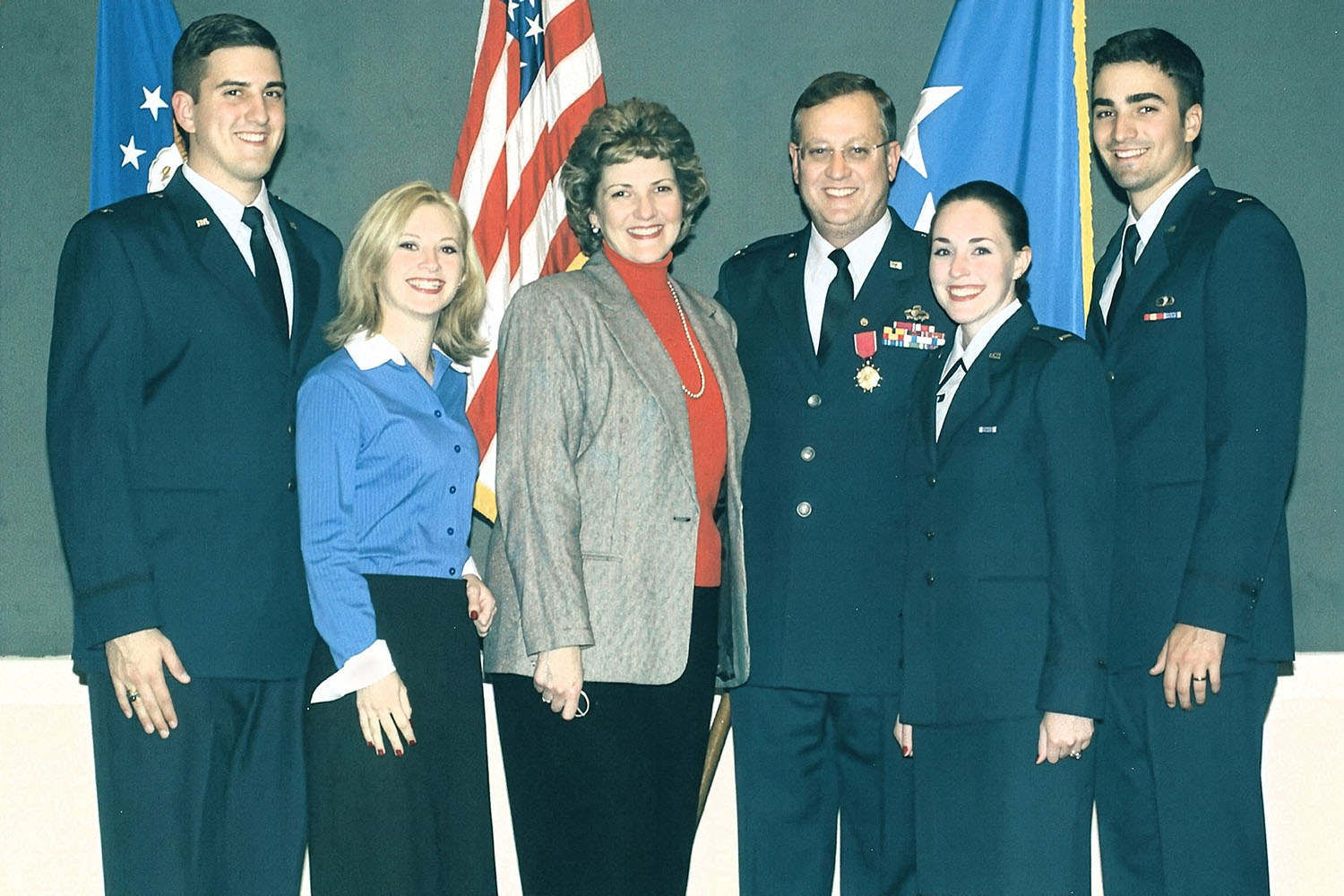
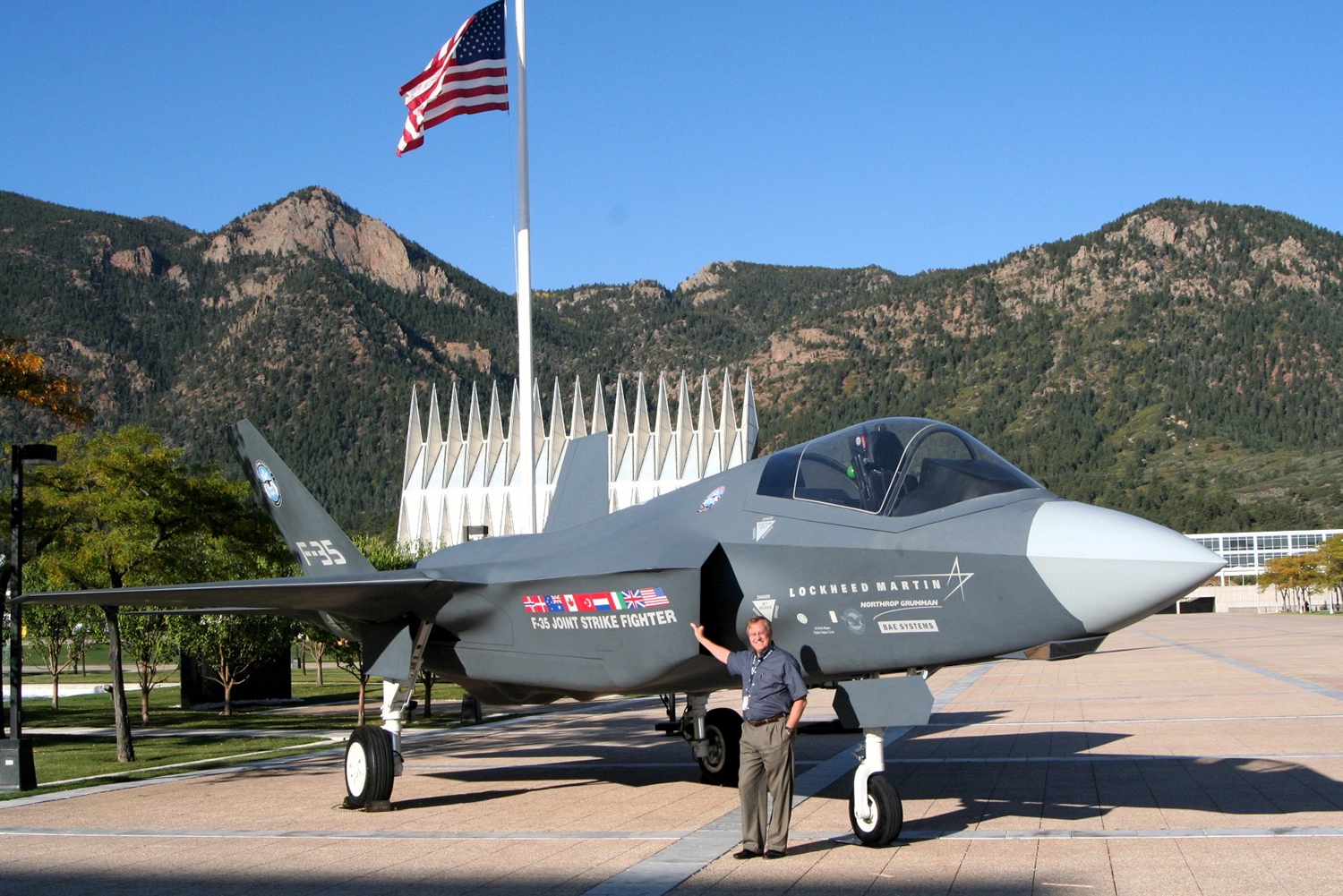
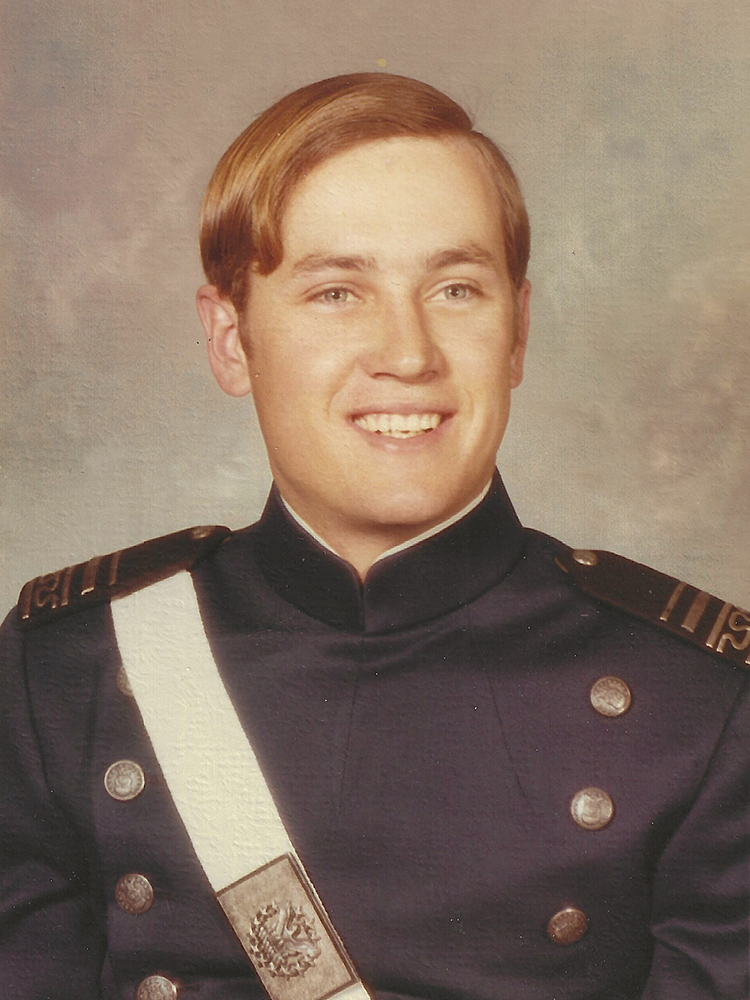
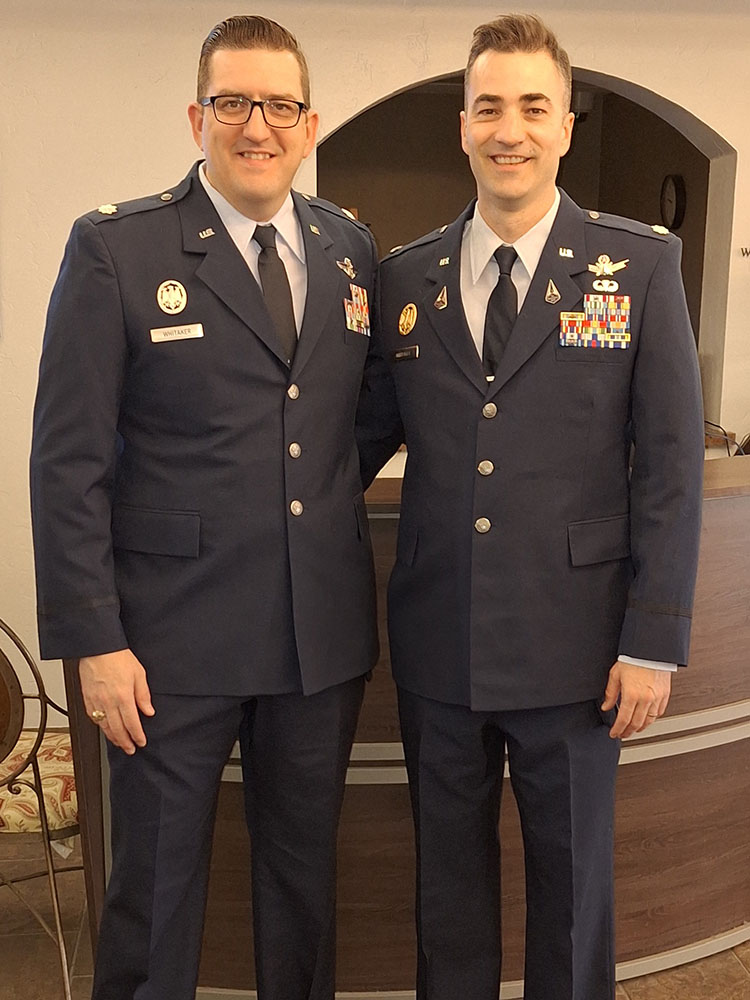
(Left image)(Top image) At Johnny's active
duty retirement ceremony: (L-R) 2Lt Nick Whitaker; Nick’s wife,
Jamie; Nancy and Johnny; Jonathan’s wife, 2Lt Jennifer Whitaker (a
USAF PAO followed by a career as a DOD civilian PA); and 2Lt
Jonathan Whitaker.
(Right image)(Bottom image) In retirement, he
couldn't stay away: Johnny with his favorite aircraft, built by his
favorite company, at his favorite school.
Johnny’s impact on the public affairs community continued long after
he hung up his uniform in 2003. As the first senior civilian Director
of Communications at the Air Force Academy, he stepped into one of the
most challenging institutional communications environments in the
service's history — advising the Superintendent and senior Academy
leadership through a major sexual assault scandal, a significant Honor
Code violation, and allegations of religious impropriety. There was no
playbook for much of what he encountered. He wrote one.
Johnny’s third career helped shape public understanding of programs
central to national defense and global security. As a senior
communications executive with Lockheed Martin Aeronautics, he led
communications for programs including the F-22 Raptor, C-130J, and
F-35 Lightning II. In that role, he demonstrated that his skills
translated far beyond the uniform — a further testament to the breadth
and quality of the career field he helped define.
Across every chapter of that career, Colonel Johnny Whitaker
exemplified the highest ideals of the public affairs profession. He
built teams that thrived under pressure and mentored generations of
communicators. He belongs in the Air Force Public Affairs Hall of Fame
not because of any single achievement, but because of a lifetime of
them.
You can read Johnny's
biography here.